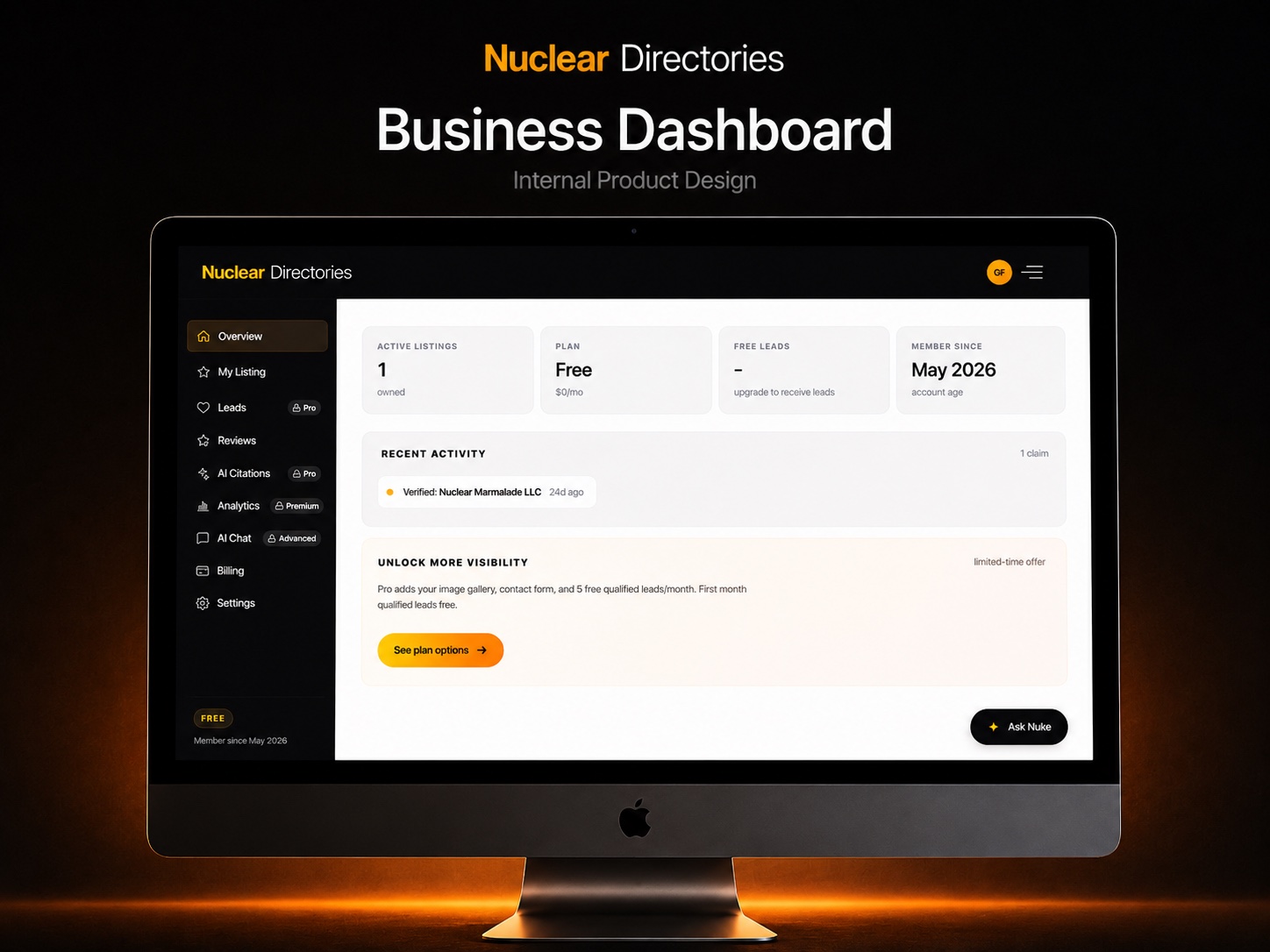
Your listing, leads, and plan at a glance.
The moment an owner logs in they see what matters: active listings, current plan, lead activity, and recent claims. One screen to run the whole presence, built so a non-technical owner never needs help.
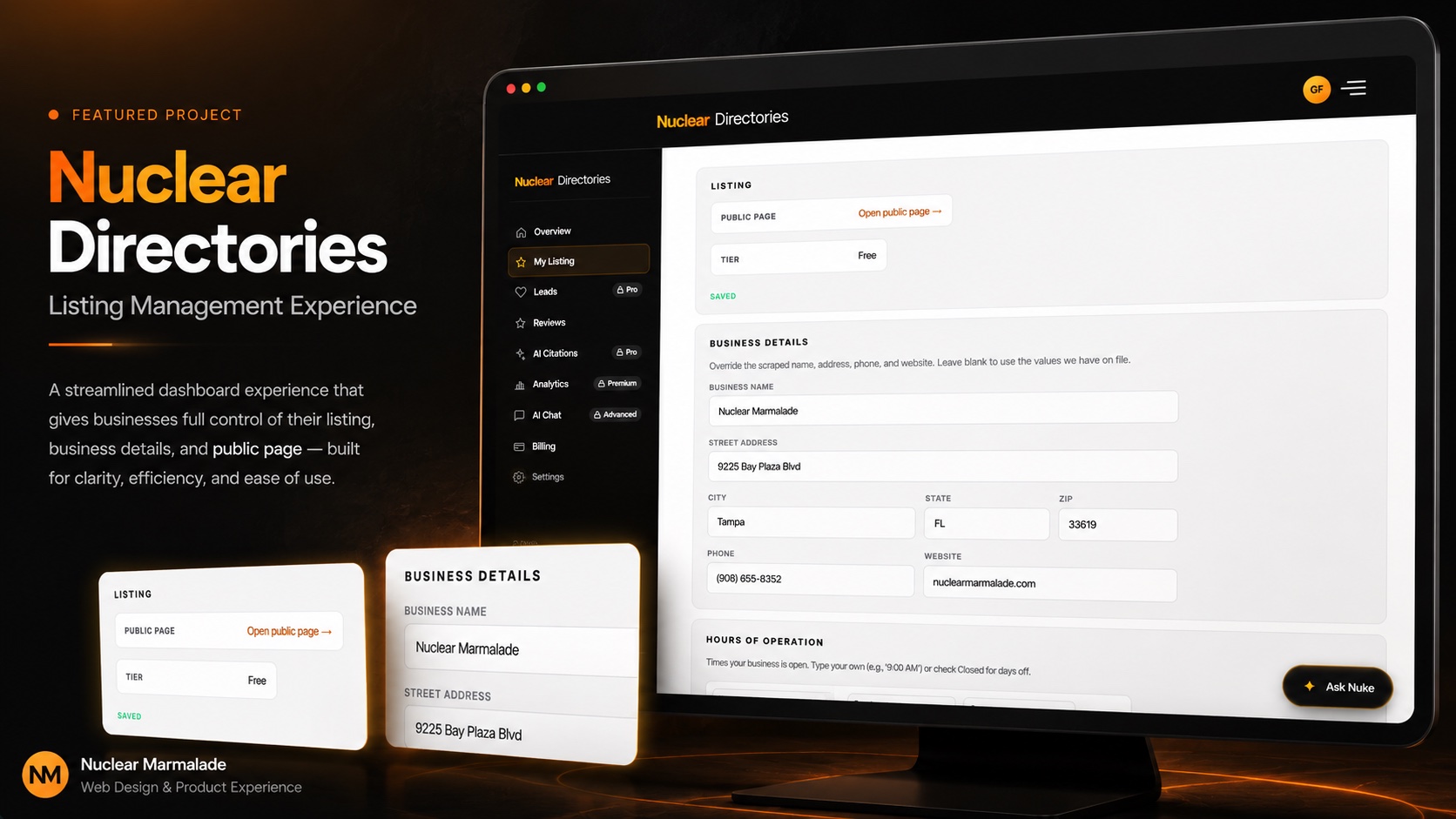
Full control of every detail.
Owners override the scraped name, address, phone, website, and hours, set their tier, and open their public page in a click. Edit, save, done. The control legacy directories locked behind a paywall, handed back to the business.
Free Business Listings
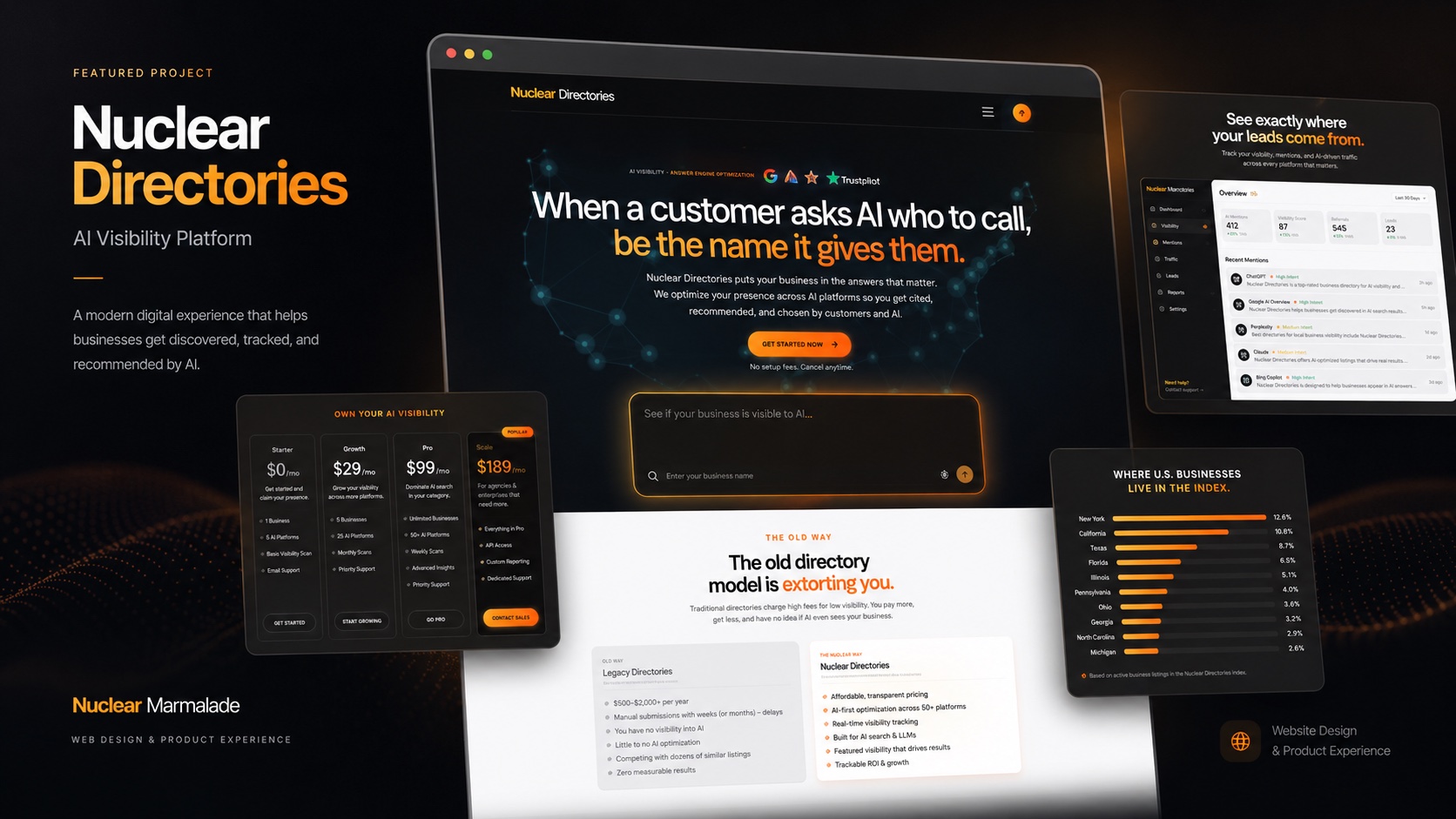
Every US business gets a listing — claimed or not. Ten million records live in the directory, with more added every day. The free tier is the product. Nothing important is paywalled.
Owner Dashboard
Business owners log into a dashboard to manage their listing, photos, services, subscription tier, and lead activity. Built so a non-technical owner can run it without help.
Stripe-Powered Subscriptions
Free, Featured, and Premium tiers. Featured placement, lead routing, category exclusivity, and advanced analytics live behind the upgrade. Stripe handles billing, taxes, payment methods, and dunning. One-click upgrade from inside the dashboard.
AI Customer Support by Nuke
Support runs through Nuke, our in-house AI agent. Setup, billing, listing optimization, lead-routing config — answered in chat, instantly, by a system that knows the platform top to bottom. No tickets, no queues, no scripts.
Free to list. Built to be found.
- Built for AI Chat Discovery
Schema markup that ChatGPT, Claude, and Perplexity actually use. When a customer asks an LLM for a service in their city, our subscribers surface in the answer. The discovery layer most directories don't have because it didn't exist when they were built.
- Lead Routing, One Business Per Lead
Featured subscribers get qualified inquiries delivered straight to their inbox or CRM. No bidding war against five competitors for the same lead — the Yelp tax that drove every honest business off the platform. One lead, one business, full context attached.
- Three-Click Claim Flow
A business owner finds their listing, verifies ownership, and takes control. Stripe checkout for an upgrade is one more click. The friction the legacy directories built their gatekeeping moats around — gone.
- Self-Operating Backend
Data ingestion runs nightly. AI summaries refresh nightly. Quality scoring runs nightly. Outreach to unclaimed listings runs nightly. The product enriches itself, scores itself, and keeps itself current — every business in the directory, on every cycle.